Ideas from the work, sent by email. Sign up for the newsletter →
runpoint.

Where we work.

Runpoint Foundation is the shared starting point. The outcome changes with the industry, because a services firm, a mechanical contractor, a PE-backed operator, and a manufacturer measure different results.

Four versions of Runpoint Foundation.

The foundation is shared. The language, workflows, proof, and return case are specific to the company in front of us.

Two experienced colleagues review a proposal and delivery plan at a sunlit worktable.

Professional Services

Run the firm from the first client call through delivery and cash collection.

Explore professional services →
Common problems, what we build, and what changes
Runpoint Foundation for Professional Services →

Shorten the path from the first sales call to a signed scope, a staffed project, and healthy delivery margins.

Sales calls · Scoping · Proposals · Projects · Staffing · Billing

Common problems

Where the drag shows up

  • Every proposal starts from a blank page
  • Signed scope gets retyped into project and staffing tools
  • Staffing, delivery risk, and scope creep live in chats and spreadsheets

What we build

Where we usually start

  • Pipeline, proposals, and SOWs
  • Skills, availability, and staffing
  • Project health, margin, billing, and collections

What changes

What gets better on the ground

  • Faster proposal turnaround
  • Cleaner scope and staffing handoffs
  • Earlier warning on delivery risk and revenue leakage

A field technician and site lead coordinate work on rooftop HVAC equipment.

Trades & Field Service

Connect every job from the first call through dispatch, field work, billing, and payment.

Explore trades & field service →
Common problems, what we build, and what changes
Runpoint Foundation for Trades & Field Service →

Reduce call-to-cash time by connecting sales, dispatch, field work, inventory, billing, and customer history.

Calls · Quotes · Dispatch · Work orders · Inventory · Cash

Common problems

Where the drag shows up

  • Dispatchers missing customer, site, or equipment history
  • Technicians calling the office for parts and job details
  • Completed work, labor, and payments do not reconcile cleanly to the invoice

What we build

Where we usually start

  • Customer records, quotes, and dispatch
  • Mobile work orders, parts, inventory, and sign-off
  • Labor, fleet, invoicing, payments, and a customer portal

What changes

What gets better on the ground

  • A complete job record in the office and field
  • Less chasing between technicians and dispatch
  • Faster billing in a system the company owns and can change
Two business leaders review operating plans beside an active manufacturing floor.

PE-Backed Mid-Market Companies

Build the operating system behind the value creation plan without turning the company into a technology project.

Explore PE-backed companies →
Common problems, what we build, and what changes
Runpoint Foundation for PE-Backed Companies →

Connect the value creation plan to the workflows, data, and reporting that determine revenue, margin, and cash.

First 100 days · Measured build · Hold period · Exit

Common problems

Where the drag shows up

  • Sales, operations, and finance use different numbers
  • Margin erosion becomes visible after month-end
  • Add-ons bring duplicate tools while board reporting consumes management time

What we build

Where we usually start

  • Quote-to-cash workflows
  • Margin, capacity, and board reporting from operating data
  • Add-on system and data integration

What changes

What gets better on the ground

  • A first build tied to a measured return
  • Less reporting burden on management
  • Cleaner data, documented workflows, and owned software at exit
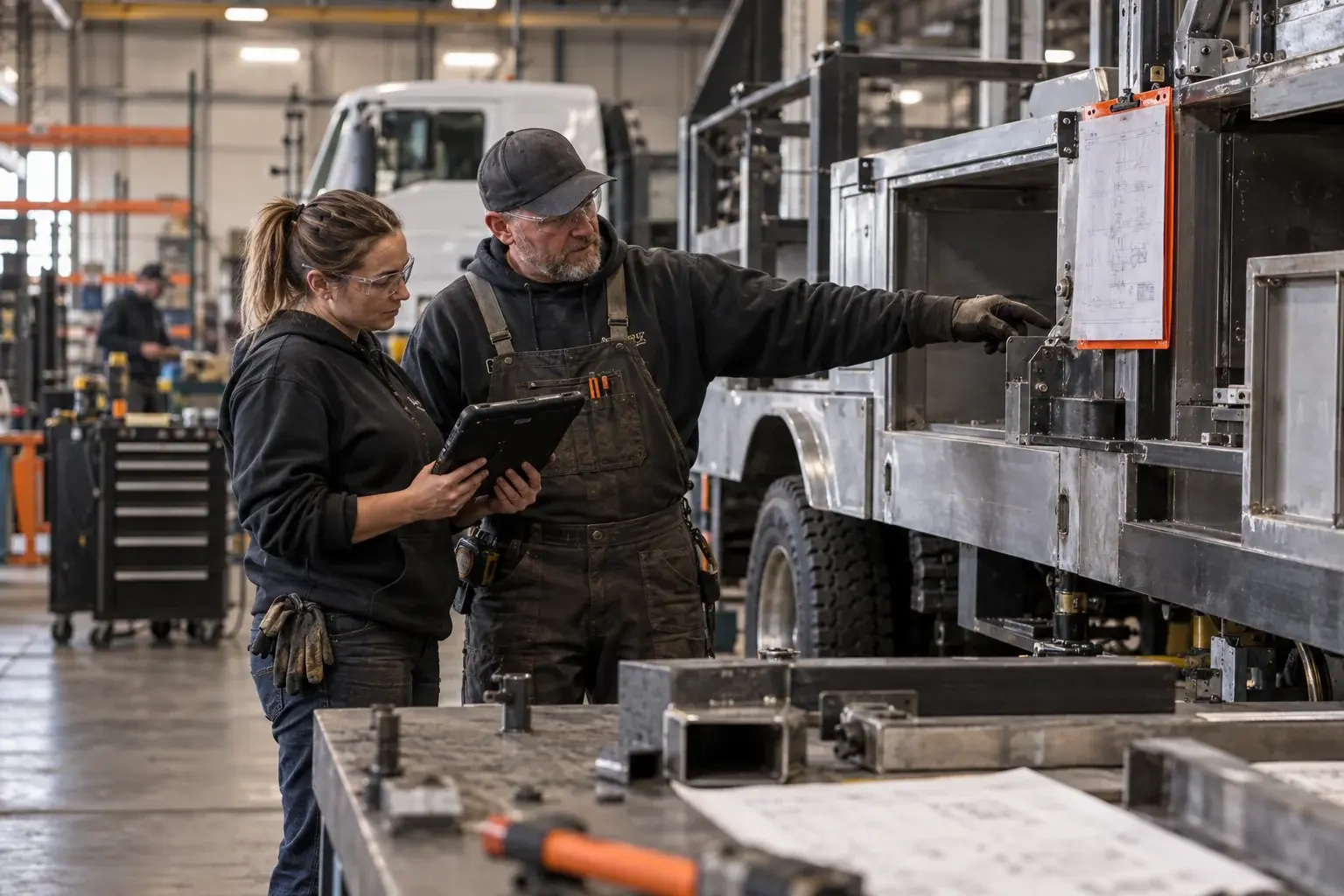
A production lead and operator review an active job beside a specialty vehicle under construction.

Manufacturing

Connect the customer request to the quote, production schedule, shipment, and payment.

Explore manufacturing →
Common problems, what we build, and what changes
Runpoint Foundation for Manufacturing →

Carry the customer request through quoting, scheduling, production, quality, shipping, and billing with less re-entry between teams.

Inquiry · Quote · Schedule · Production · Quality · Shipping · Billing · Cash

Common problems

Where the drag shows up

  • Order details and revisions get retyped between the ERP and spreadsheets
  • Schedules depend on capacity and material availability that are hard to see
  • Shop-floor progress, quality issues, and job margins reach the office too late

What we build

Where we usually start

  • Customer requests, quotes, and revision history
  • Capacity, materials, production status, and quality records
  • Shipping, billing, job margin, and collections

What changes

What gets better on the ground

  • Less re-entry from the first inquiry through the order
  • Earlier notice of material shortages and production delays
  • A clearer path from completed work to billing and cash
Where the first return can come from.Our first work is usually the costly process everyone can name and measure before the build begins.

Professional services

Good first workflow

Turn the first client conversation into a proposal, scope, and project record.

Return case

Proposal work that once took Runpoint about two days

Trades & field service

Good first workflow

Replace the rented field-service platform with dispatch, work orders, and billing you own.

Return case

$200K in first-year license fees at Smith Mechanical

PE-backed companies

Good first workflow

Choose the workflow most likely to block the value creation plan and underwrite it before building.

Return case

Software fees, manual work, delayed billing, or lost margin

Manufacturing

Good first workflow

Connect customer requests, quote revisions, and order details so sales and production work from the same information.

Return case

Time spent retyping orders, chasing revisions, and preparing quotes

Start with the result, then shape the system.

Retired software can help fund the work, but the larger return comes from faster sales and service, fewer handoffs, better margins, and a clearer view of the business.

What we look for

We have shaped a distinct starting point for each one, grounded in the language, daily work, and financial case that its leaders already understand.

In these businesses, the cost of bad systems is easy to see: slower sales and service, more manual work, more people moving information between tools, and less trust in the numbers.

  • An established business with enough complexity to feel the drag
  • A costly process crossing sales, operations, and finance
  • A return case tied to software, labor, margin, speed, or cash
  • Leadership ready to own the change as well as the software

What we actually solve.

The industry language changes. The conditions for a good first build stay remarkably consistent.

Messy is good. The pattern is usually the same.

  1. 01One costly workflow with a measurable baseline
  2. 02Several teams retyping or reconciling the same information
  3. 03Software fees or outside labor that can help fund the build
  4. 04AI interest blocked by scattered data and rigid tools
  5. 05Leadership willing to change the workflow, not just install software
  6. 06A clear owner who can carry the system after handover

Build the business case.

Run the numbers, inventory the software, and bring us the costly workflow everyone can name. We'll help you decide whether the return is strong enough to build.